How Does a Laboratory Centrifuge Work? A Complete Guide for Blood Banks
Meta Description: Learn how a laboratory centrifuge works, from RPM and RCF to rotor types and safety interlocks, and what specs matter when choosing one for a blood bank or diagnostic lab.
If you work in a blood bank, diagnostic lab, or hospital pathology department, you already rely on a centrifuge every day — even if you have never thought hard about what happens inside it. Understanding how a laboratory centrifuge works helps you get more consistent results, extend the life of the machine, and choose the right model when it is time to replace or expand your equipment.
At Anwar Sons, we supply centrifuges — including our brushless-motor AM 1100 model — to labs and blood banks across Pakistan. This guide breaks down the science and the practical buying considerations.
The Basic Principle: Centrifugal Force
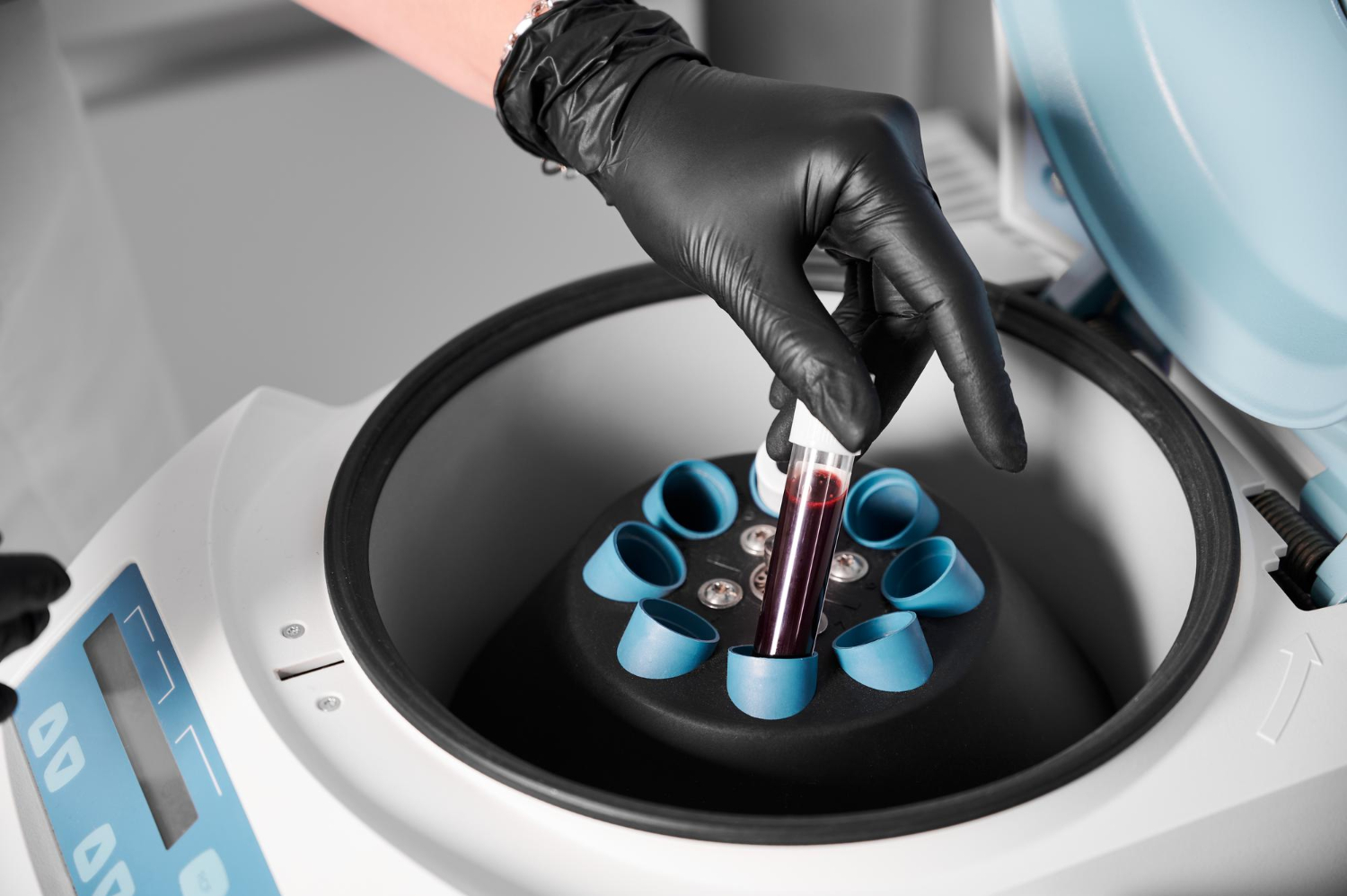
A centrifuge spins a sample at high speed inside a rotor. That spinning motion creates centrifugal force, which pushes denser particles outward and toward the bottom of the tube faster than lighter particles. In a blood sample, this means red blood cells (the densest component) settle first, followed by white blood cells and platelets, leaving plasma or serum at the top.
RPM vs. RCF: What the Numbers Actually Mean
RPM (Revolutions Per Minute)
This is simply how fast the rotor spins. Our AM 1100 Brushless centrifuge reaches a maximum speed of 3000 RPM, which is typical for routine blood bank and lab separation work.
RCF (Relative Centrifugal Force)
RCF is the actual force applied to the sample and depends on both RPM and the radius of the rotor. Two centrifuges spinning at the same RPM but with different rotor sizes will apply different forces — which is why protocols usually specify RCF (in "x g") rather than RPM alone whenever precision matters.
Key Components and How They Work Together
- Motor: Brushless DC motors, like the one in our AM 1100, run quieter, generate less heat, and need far less maintenance than older brushed motors since there are no carbon brushes to wear out or replace.
- Rotor: Holds the tubes or buckets in place during spinning. Our AM 1100 is designed for a 6.6 x 20 mL tube capacity, suited to standard blood bank and diagnostic tube sizes.
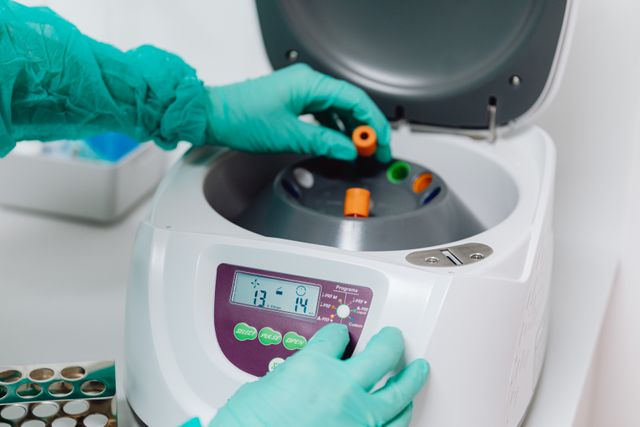
- Timer: An adjustable timer (up to 30 minutes on the AM 1100) lets technicians match spin duration to the protocol — short spins for quick platelet-rich plasma separation, longer spins for complete serum separation.
- Safety lid interlock: Prevents the lid from opening while the rotor is still spinning, and prevents the motor from starting unless the lid is properly closed.
Why Motor Type Matters
Brushless motors have become the standard for lab centrifuges for a simple reason: carbon-brush motors wear down with use, throw off fine carbon dust that can contaminate a clean lab environment, and need periodic brush replacement. A brushless design like our AM 1100 (220V power) avoids all three problems, which is part of why it needs less servicing over its lifetime and typically ships with a 1-year manufacturer warranty.
Choosing the Right Centrifuge for Your Lab
Before buying, ask:
- What sample volume and tube size do you process most often? Match the rotor capacity to your actual daily workload, not just the largest tube you occasionally use.
- Do you need a fixed-angle or swing-out rotor? Fixed-angle rotors are common in blood banks for straightforward serum/plasma separation.
- How much bench space do you have? Compact benchtop units are usually sufficient for routine blood bank and clinic work.
- What is your typical spin time? A timer with enough range (like the 30-minute adjustable timer on the AM 1100) avoids interrupting longer protocols.
Maintenance Tips for Longer Centrifuge Life
- Always balance opposing tubes by weight before spinning — an unbalanced rotor is the most common cause of premature motor wear and vibration damage.
- Clean the rotor and chamber regularly to prevent corrosion from spilled samples.
- Never force the lid open before the rotor has come to a complete stop.
- Keep the unit on a stable, level surface to reduce vibration stress on the motor bearings.
Conclusion
Understanding how a laboratory centrifuge works comes down to one core idea: spinning a sample fast enough, for long enough, to let density differences do the separating. The right combination of motor type, RPM, rotor capacity, and safety features determines how reliably your lab can repeat that process day after day.
Contact Anwar Sons Today to discuss which centrifuge model — including our brushless AM 1100 — fits your blood bank or laboratory's daily workload.