ESR Test Stand: How It Works and Why Precision Matters in Blood Testing
Meta Description: Discover how an ESR stand works to keep Westergren tubes vertical for accurate erythrocyte sedimentation rate testing, and what features matter most when choosing one.
The Erythrocyte Sedimentation Rate (ESR) test is one of the oldest and most widely used inflammatory markers in medicine — and one of the easiest to get wrong if the equipment isn't right. An ESR stand looks simple, but its design directly affects whether your results are trustworthy.
At Anwar Sons, we supply ESR stands to clinical laboratories and hospitals across Pakistan. Here's how they work and why the details matter.
What an ESR Test Actually Measures
The ESR test measures how far red blood cells settle in a vertical tube of anticoagulated blood over exactly one hour. Inflammation causes proteins in the blood to make red cells clump together (rouleaux formation), which makes them fall faster — so a higher sedimentation rate can signal an underlying inflammatory or infectious condition.
Why Vertical Positioning Is Non-Negotiable
Sedimentation rate is extremely sensitive to tube angle. Even a few degrees of tilt lets red cells slide down the lower wall of the tube instead of falling straight through the plasma, artificially speeding up the reading. This is exactly why standardized ESR methods (like the Westergren method) require the tube to be held strictly vertical — and it's the entire reason an ESR stand exists.
How an ESR Stand Works
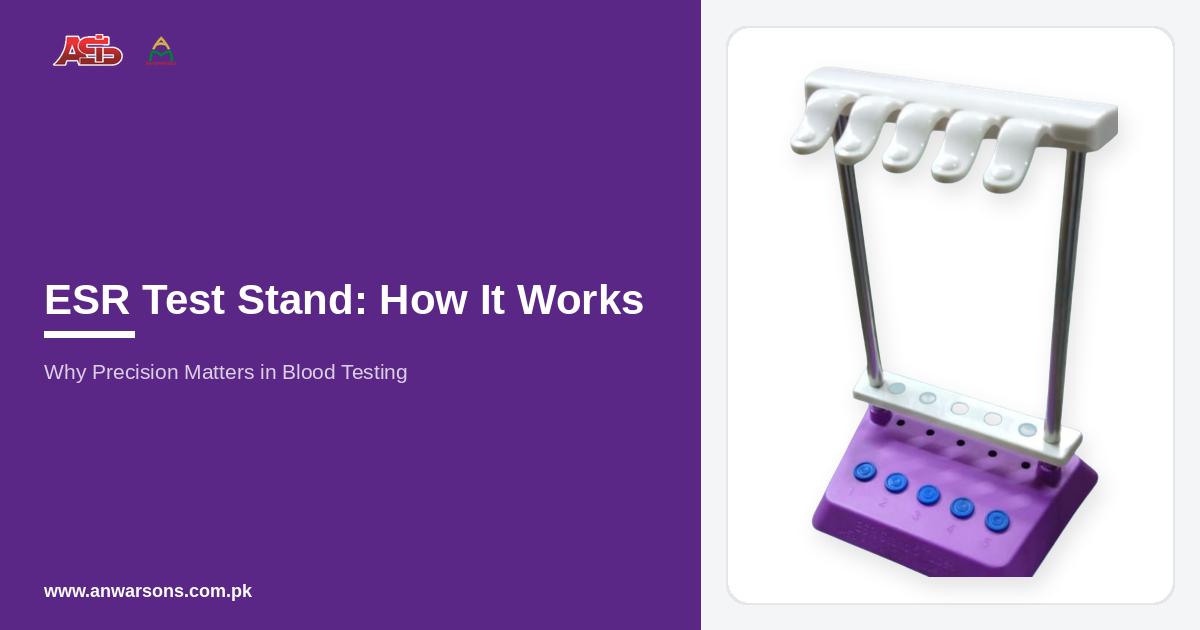
- Vertical tube holders: Precision-machined holes or clip mounts hold each Westergren pipette at exactly 90 degrees to the base, with scribed alignment marks to confirm correct positioning.
- Stable base: A cast metal or heavy acrylic base keeps the whole rack from wobbling or tipping during the one-hour test window, when even a small bump could invalidate results.
- Leak protection: A rubber base pad catches any minor leakage from the tubes, protecting the bench and preventing biohazard exposure.
- Batch capacity: Depending on the model, an ESR stand can hold anywhere from 3 to 20 tubes at once, letting a lab run multiple patient samples in parallel on the same one-hour timer.
What to Check Before Buying an ESR Stand
- Tube capacity that matches your daily volume — a 20-tube stand makes sense for a busy hospital lab; a smaller stand is fine for a low-volume clinic.
- Solid, non-slip base material — cast metal tends to be more stable than lightweight plastic alternatives.
- Clearly scribed vertical alignment marks so technicians can visually confirm correct tube seating at a glance.
- Easy-to-clean surfaces, since the stand will regularly come into contact with blood samples.
Common ESR Testing Mistakes to Avoid
- Reading the result before or after the full 60-minute mark — timing errors are one of the most common sources of inaccurate ESR values.
- Using a stand that isn't level, which reintroduces the exact tilt problem the stand is designed to prevent.
- Leaving tubes in direct sunlight or near vibration sources (like a centrifuge) during the test.
- Reusing a stand with worn or widened tube holes, which allows tubes to sit slightly off-vertical.
Conclusion
An ESR stand's job sounds simple — hold a tube upright — but that single requirement is what makes an entire diagnostic test reliable. A stable base, true vertical alignment, and adequate tube capacity are the three things that separate a dependable ESR stand from one that quietly introduces error into your results.
Contact Anwar Sons Today for ESR stands built for consistent, accurate sedimentation rate testing in your lab or blood bank.